Selling the “Front-End” Loss: Thinking Long-Term Profit
Most contractors price every job the same way, using a simple cost plus margin formula, and if the margin is not there, they walk away.
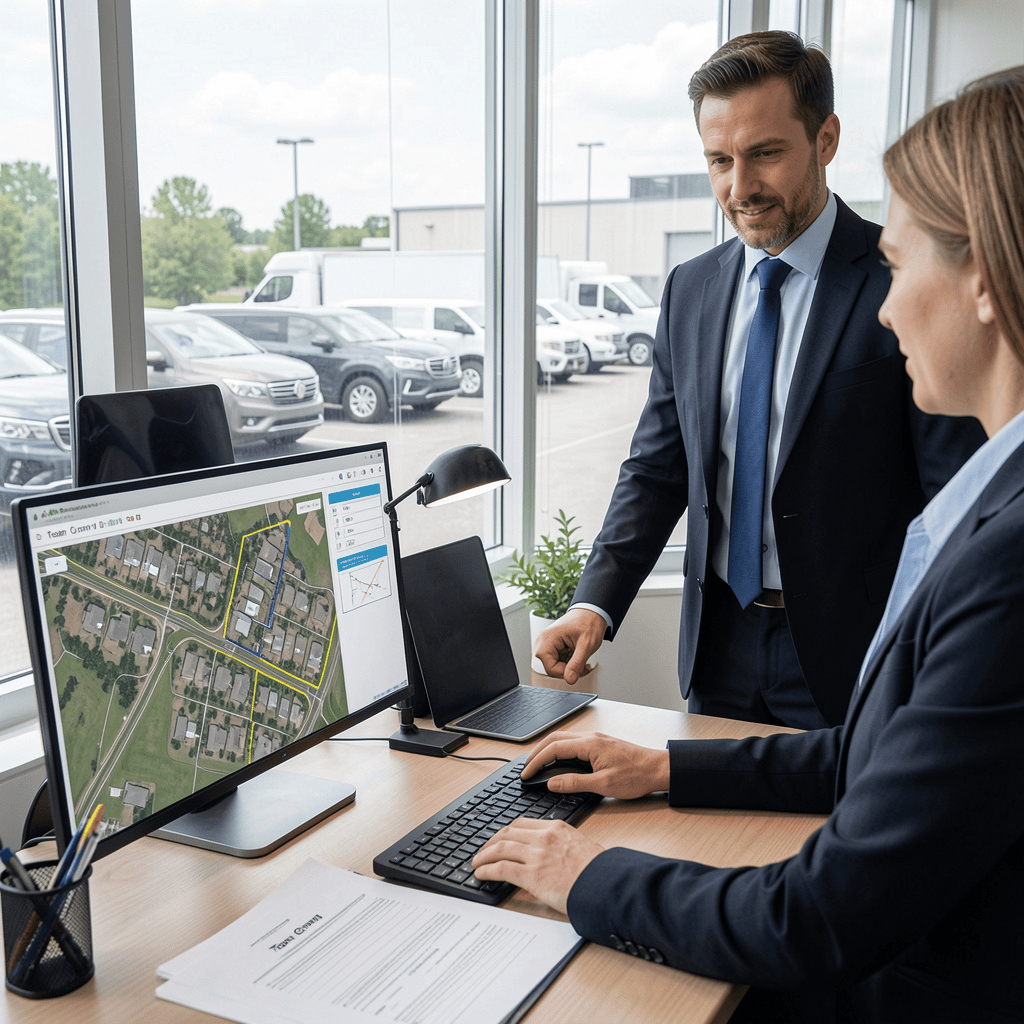
Driving to each estimate used to be the standard process: fuel, windshield time, walking the property, measuring manually, then returning to write the quote. It works but is inefficient. The industry’s next evolution isn’t about eliminating field visits but reducing unnecessary ones. AI satellite estimating enables contractors to pre-qualify, measure, and prepare bids from their desk.
When combined with tools like Google Earth and AI construction estimating software, you can significantly shorten estimate times. This article details how to use satellite imagery and AI to generate faster bids without sacrificing accuracy.
Today’s clients expect rapid responses. If you take three days to deliver an estimate while a competitor responds in one, you lose momentum. Fast estimates aren’t rushed but efficiently gathered. AI construction estimation tools, combined with satellite imagery, enable you to measure acreage, access points, slope, and layout without visiting the site. Faster responses lead to higher close rates.
AI satellite estimating is not guesswork.
It combines:
You use satellite tools like Google Earth to outline property boundaries, measure square footage or acreage, and assess terrain features. AI tools then assist in converting these measurements into organized bids. The aim is to ensure clarity before the truck arrives.
Google Earth is more powerful than many contractors realize.
From your desk, you can:
This provides early insight into the project’s scope, helping you decide if a site visit is necessary. Pre-qualification streamlines the process and saves time.
Using the polygon measurement tool in Google Earth, you can outline:
Within minutes, you can estimate square footage or acreage. AI construction estimating tools can then convert this data into projected production times based on your average hourly output. This removes the guesswork involved.
Using the polygon measurement tool in Google Earth, you can outline:
Within minutes, you can estimate square footage or acreage. AI construction estimating tools can then convert this data into projected production times based on your average hourly output. This removes the guesswork involved.
A satellite view discloses the possible difficulties:
Instead of discovering these issues on-site, you identify them during the review. Contractors who are prepared tend to ask more insightful questions, which in turn lead to more accurate estimates.
After the measurements have been taken, AI tools assist in organizing the bid.
You input:
The software calculates a preliminary cost range using your preset pricing formulas. This accelerates bid creation while still allowing your judgment to guide decisions. AI provides support but does not make the final decision.
Not every inquiry turns into a project. Satellite estimating allows you to quickly filter out unsuitable options. If a property is too small, too steep, or beyond your travel distance, you find out within minutes. This helps minimize unnecessary site visits. Saving time boosts your profitability.
With satellite measurements and AI-assisted pricing, you can send preliminary quotes the same day.
These can be labeled as:
Clients value quick responses, as they help build trust.
Satellite estimating does not replace site visits, but it minimizes the need for them.
You should still visit when:
The desk estimate helps you plan a more effective site walk. Well-prepared visits are quicker and more efficient.
Fuel expenses, travel time, and vehicle wear accumulate over time. If you manage to cut out just two unnecessary estimated trips each week, the savings will multiply.
Less travel also results in:
Efficiency is the key to keeping your margins intact.
When you have the measurements, AI tools can assist with drafting:
This guarantees uniformity across bids. Consistency enhances professionalism, and a professional presentation helps achieve better pricing.
Some contractors fear that satellite estimating reduces accuracy.
The key is balance.
Use satellite tools for:
Use field visits for:
Combining both increases efficiency without sacrificing precision.
Clients are increasingly expecting quick responses. Contractors who utilize AI construction estimation software gain a competitive advantage. When you can measure, price, and respond swiftly, you control the momentum of the project. This momentum helps close deals. Conversely, slow responses can result in losing opportunities.
You do not have to handle all estimates alone.
Train office staff or estimators to:
Delegating estimating tasks allows you to concentrate on operations and leadership. Structured training helps develop scalable systems.
The more projects you complete, the more accurate your production data becomes. Incorporate real job data into your pricing formulas. AI tools improve in precision when backed by real-world numbers. Accuracy increases with repeated use.
Speed should never undercut margin.
Your pricing formulas must include:
AI tools compute results more quickly. However, they should never replace disciplined pricing strategies.
By the end of this decade, desk-based estimating will become widespread. Contractors who adopt satellite tools and AI workflows early on will gain a competitive edge. Technology minimizes obstacles, leading to greater growth potential. Contractors who are prepared can scale more quickly.
AI satellite estimating isn’t about eliminating fieldwork; it’s about working smarter. With tools like Google Earth and AI-based construction estimation software, you can measure properties, prepare quotes, and pre-qualify jobs from your desk.
This increases response speed, enhances accuracy through better preparation, and boosts profitability through efficiency. Contractors who implement structured estimating systems now will surpass those relying solely on windshield time. Quoting from your desk doesn’t replace experience; it amplifies it.

Most contractors price every job the same way, using a simple cost plus margin formula, and if the margin is not there, they walk away.

More marketing doesn’t always lead to more growth; sometimes it results in wasted expenditure. Many contractors invest in ads without realizing they are already ranking
When work diminishes, the simplest solution often appears straightforward: buy leads. Platforms claim to offer exposure, steady inquiries, and growth without additional marketing. For many

Most contractors compete for attention, but few focus on building trust. In competitive markets, attracting attention is easy through paid ads, but earning trust is

In excavation, skill is important, but first impressions matter more. Before a client assesses your grading or speed, they form an opinion based on your

Most contractor websites tend to look similar, featuring stock photos of excavators, generic quality statements, a list of services, and a phone number at the

Before ads, SEO, or social media, there is Rule Number Zero: protect and grow your reviews. In today’s market, your Google profile often forms the

Most contractors complete a job and leave without collecting money on the invoice; instead, they leave an impression on the street. When you finish a
Most contractors believe growth begins with advertising. However, true growth in excavation businesses starts with a solid foundation and referrals. Leading companies in this field