
AI Content Generation: 30 Days in 1 Hour
Social media succeeds through consistency, but many excavators avoid it because daily posting feels like another full-time job. They are busy operating equipment, managing crews,
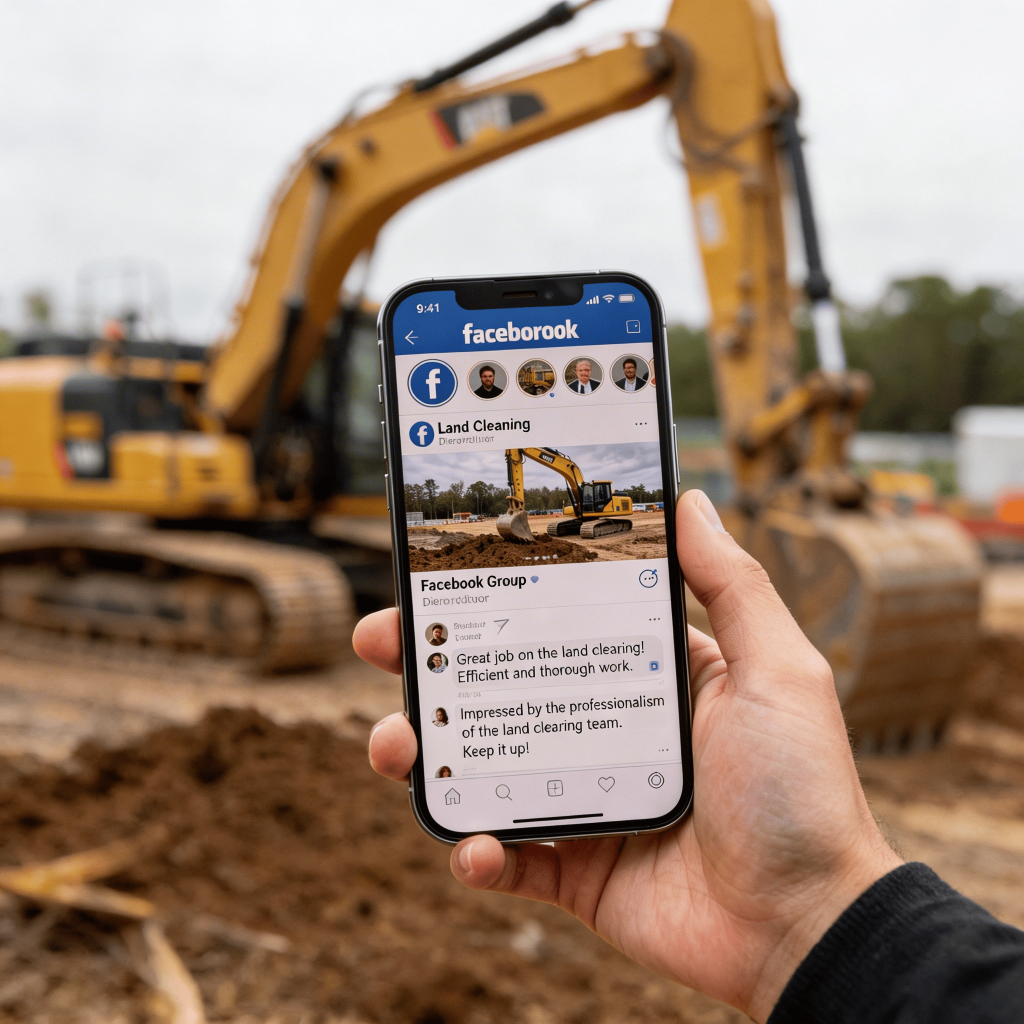
Most contractors view Facebook as just a billboard, posting ads with a phone number and hoping for calls. However, this approach seldom succeeds in local Facebook groups. These communities appreciate genuine help over hype. For consistent inbound leads, you should behave like a helpful neighbor rather than a pushy salesperson.
This article explains how local Facebook marketing for contractors works and how to generate inbound leads from community groups without spamming or chasing.
Why Facebook Groups Matter for Local Contractors
Facebook groups function as digital neighborhoods, where homeowners, landowners, and small developers share genuine questions.
People ask about:
They seek local answers from community members. This makes groups a valuable source of inbound leads.
Why Selling Fails in Community Groups
Most groups are not fond of self-promotion. Admins delete obvious advertisements, and members tend to ignore sales posts. When contractors post messages like “Call me for a quote,” trust decreases because it often seems like spam. The quickest way to generate leads is to avoid direct selling.
The “Helpful Neighbor” Approach
The helpful neighbor answers questions, explains options, and shares experiences without pressuring. This approach builds trust before any direct contact. When people require assistance, they recall who was helpful. This is how inbound leads are generated.
How Trust Turns Into Leads
Trust rapidly increases within groups. When someone publicly thanks you, others become aware of you. Your name starts to become recognizable. Soon after, someone comments, “I’ll message you,” which turns into an inbound lead. All this happens without spending on ads or cold outreach.
What to Look for Inside Local Groups
Not every post is an opportunity.
Focus on:
These signals indicate buying intent. Responding to them helps you position yourself as the solution.
Keep responses brief and helpful. Do not include links or phone numbers in the initial reply. Clearly describe the problem.
Example:
“Clearing that much brush usually requires heavy equipment. Hand clearing often costs more in the long run.”
That is help, not a pitch.
When to Move the Conversation Private
Once someone asks a follow-up question, you can offer to message them.
Example:
“If you want, I can take a look and give you an idea of options.”
Encourage them to agree. This approach maintains respect and promotes effectiveness.
Ads interrupt. Helpful comments tend to attract attention. When people gather in groups, they often discuss issues naturally. Instead of trying to impose your views, join these conversations. That’s why the most effective local Facebook marketing for contractors is achieved through active participation.
How Often You Should Post or Comment
Consistency is more important than frequency. You don’t have to comment every day; just two or three helpful replies weekly are sufficient. Recognition develops gradually, and leads will follow.
What to Avoid in Facebook Groups
Avoid these mistakes.
How This Builds Long-Term Visibility
Even old comments are read. Someone browsing the group weeks later might come across your reply, generating delayed leads. Your effort then adds up over time.
Turning Group Activity Into Real Jobs
When leads make contact, reply promptly. Incorporate the group seamlessly into the conversation. Show appreciation for their connection. This helps to complete the trust cycle. As a result, they already feel at ease with you.
Tracking Results Without Overthinking
You don’t need spreadsheets. Simply ask new leads how they discovered you. If you hear “Facebook group” over and over, it’s a sign your strategy is effective.
Facebook groups reward those who assist others. When you engage like a neighbor rather than a marketer, inbound leads naturally follow. For contractors, local Facebook marketing isn’t about posting ads; it’s about being visible, helpful, and professional. Answer questions, share your experience, and remain consistent. Over time, the jobs will come to you.

Most excavation companies understand where their leads originate. However, few know which leads actually generate revenue. When a call is received, a job is scheduled,

Mobilization fees often cause confusion in excavation pricing. Customers notice an unexpected line item and may assume it’s additional profit, creating tension before work begins.

Every contractor encounters it. “I received a lower quote.” For many, that statement ends the discussion. They either lower their price, defend their value, or

Many excavation jobs are lost before price is even considered. The issue isn’t always the quote itself, but how it’s presented. A brief text message

Root raking is frequently misunderstood. Many landowners view it as extra effort, consider it optional, or confuse it with basic debris removal. This misunderstanding makes

Most contractors view Facebook as just a billboard, posting ads with a phone number and hoping for calls. However, this approach seldom succeeds in local

TikTok isn’t just about trends and dances. It’s also a powerful platform for showcasing real work, especially heavy equipment. Excavators, for example, shift dirt quickly,

Your work may be clean, but your photos often aren’t. Dust, shadows, cluttered backgrounds, overcast skies, and inconsistent lighting can spoil an otherwise excellent “after”

Social media succeeds through consistency, but many excavators avoid it because daily posting feels like another full-time job. They are busy operating equipment, managing crews,